.jpg?width=1500&height=750&name=%5BDCH%5D%20Logo%20(1).jpg)
.jpg?width=1800&height=900&name=%5BDCH%5D%20Blog%20Image%20(14).jpg)
Custom Home Building
Maintenance-Free Living
Community Living
.jpg?width=1800&height=900&name=%5BDCH%5D%20Blog%20Image%20(15).jpg)

When people hear the words “custom home,” they often picture something oversized, expensive, complicated, or filled with luxury upgrades in every room. That can be one version of custom building, but it is far from the only version.
A custom home does not have to mean building more house than you need, choosing the most expensive finish in every room, or adding spaces that look impressive on paper but rarely get used in daily life. At its best, custom homebuilding is about creating a home that fits the way you actually live.
For some homeowners, that may mean a larger home with specialized spaces. For others, it may mean a more efficient floor plan with thoughtful details in the areas that matter most. The real value of custom is not always about building bigger. It is about building smarter.
A custom home is designed around your needs, priorities, property, lifestyle, and budget. It gives you more flexibility than a standard plan, but that flexibility does not automatically mean every part of the home has to be complicated, oversized, or high-end. If you are still comparing your options, it can help to understand the difference between working with a custom home builder and a tract builder.
Custom can mean:
• A floor plan that fits how your household actually moves through the day
• A kitchen layout that supports the way you cook, gather, and entertain
• A mudroom that works for your routines instead of becoming a clutter zone
• A garage that fits your vehicles, storage, hobbies, or tools
• A main-level owner suite planned for comfort and long-term convenience
• A screened porch or outdoor living space you will actually use
• Storage in the right places instead of extra rooms that sit empty
• Finish selections that are practical, durable, and still beautiful
Custom is not about adding everything. It is about choosing intentionally, so the home supports the way you want to live. For one homeowner, that may mean elevated finishes and unique design details throughout the home. For another, it may mean keeping the footprint efficient, simplifying selections, and focusing the budget on the spaces used every day.
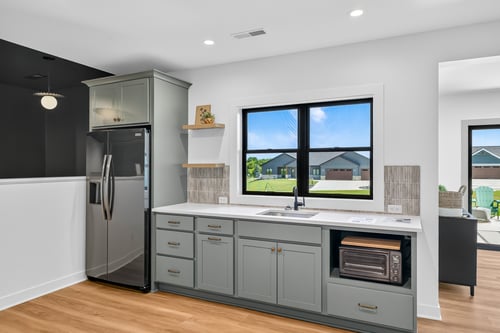
One of the biggest misconceptions about building a custom home is that the home has to be large to be worth it. In reality, extra square footage can add cost quickly because more space usually means more foundation, more framing, more roofing, more flooring, more heating and cooling, more maintenance, and more decisions.
That does not mean square footage is bad. It simply means square footage should have a purpose. A well-designed home with a practical layout can often feel more livable than a larger home with wasted space, especially when the rooms are sized and arranged around real routines.
Before adding more square footage, it helps to ask:
• Will we use this space regularly?
• Does this room solve a real need?
• Could better layout or storage solve the same problem?
• Is this worth the added cost now and long-term?
• Would that budget be better used somewhere else?
Sometimes the answer will be yes, and sometimes the answer will be no. That is where thoughtful planning makes a difference. The goal is not to build the biggest home possible. The goal is to build the right home for the way you live.
A custom home can be personal without being overcomplicated. Practical custom building often starts with clear priorities, because homeowners do not need to include every possible feature for the home to feel special or well-designed.
For example, one household may care most about an open kitchen and living area because they host often. Another may want a quiet office, a larger garage, or a lower-level recreation space. Someone else may care more about low-maintenance materials, an efficient floor plan, or aging-in-place features that make the home easier to enjoy over time.
A practical custom home might include:
• A simpler roofline to help manage cost
• A compact footprint with a strong layout
• Durable flooring in high-traffic areas
• Standard selections in lower-priority spaces
• A few special details in the rooms that matter most
• A lower level that can be completed later
• Flexible spaces that can change over time
These choices do not make the home less custom. They make the home more intentional, because every decision is tied back to how the home will be used.
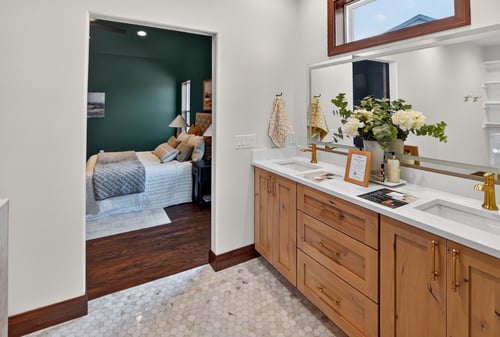
Selections are one of the areas where custom homes can start to feel overwhelming or overbuilt. Cabinets, countertops, flooring, lighting, tile, plumbing fixtures, hardware, paint colors, appliances, and exterior finishes all add up, and it is easy to feel like every choice needs to be special.
That is not always necessary. A smart custom home uses the budget where it matters most, which means some spaces may justify higher-end selections because they are used every day or create a major visual impact. Other spaces may work perfectly well with simpler, durable, cost-conscious options.
For example, you may choose to invest more in:
• Kitchen cabinetry
• A large island
• Main living area flooring
• Owner suite comfort
• Built-in storage
• Outdoor living space
• Energy-efficient features
At the same time, you may decide to keep other areas more straightforward. The goal is to make smart tradeoffs, not to make every selection the most expensive option available. Simpler does not mean cutting corners, and in many cases, cutting corners can cost more in time, stress, and repairs later.
That balance is what helps a custom home feel personal without becoming overdone.
A good custom home builder should not simply ask what you want and add everything to the plan. The right builder should help you understand tradeoffs, including how certain choices may affect cost, timing, maintenance, layout, and long-term value.
That guidance matters because an idea can look great online and still add complexity or cost that does not match your goals. In other cases, a small design adjustment may make the home function much better without dramatically changing the budget. A collaborative builder helps sort through those decisions with you, instead of leaving you to figure everything out alone.
Understanding how selections, allowances, and change orders work can also help you make confident decisions before construction begins. Those conversations are a normal part of the custom building process, and they are often what keep a home from becoming larger, more complicated, or more expensive than it needs to be.
The best way to avoid overbuilding is to start with your lifestyle instead of starting with a list of features. Before thinking about finishes and upgrades, think about how you actually live on a normal day and what you wish worked better in your current home.
Questions to consider include:
• How do you use your home on a normal weekday?
• Where does clutter tend to collect?
• Do you host often, or do you prefer quieter spaces?
• Do you need room for kids, pets, hobbies, guests, or work?
• How much maintenance do you realistically want?
• What spaces do you use the most?
• What spaces in your current home go unused?
• What do you wish worked better?
These answers can shape the home in a much more useful way than simply adding square footage or upgrades. Many homeowners are prioritizing practical features like open living spaces, natural light, home offices, low-maintenance exteriors, and outdoor living access because those features support the way they want the home to function every day.
Where you build also matters. Choosing the right community or property can shape everything from your layout to your daily routine, especially if you are building near Madison, WI. If you already own land or are considering land, it is also helpful to understand what goes into building on your own land before you get too far into planning.
A home designed around real routines often feels better than a home designed around a checklist.
Another reason people hesitate to build custom is that they assume the process will be too complicated. Custom building does involve decisions, but those decisions can be guided when there is a clear process and an experienced team helping you understand what needs to happen next.
The process becomes easier when there is structure around budget conversations, floor plan development, site considerations, selections, allowances, change requests, timeline expectations, and communication. When those pieces are organized, homeowners can make decisions with more confidence and less guesswork.
A custom home does not need to feel chaotic. With the right planning and guidance, the process can feel manageable, organized, and focused on the decisions that matter most.
A home does not need to be overbuilt to feel custom. A realistic custom home can still include the details that make it feel personal, even when those details are simple, practical, and meaningful rather than extravagant.
That could be a kitchen that flows better, a laundry room with the right storage, a porch that gets used all summer, a lower level planned for future finishing, or a main living area that finally fits the way your household gathers. Touring completed homes can also be a helpful way to see what custom can look like in real life, especially when every space is designed with a purpose.
The most important question is not, “How much can we add?” The better question is, “What will make this home work well for us?” That is where custom building becomes valuable.
A custom home may be a good fit if you want more control over your layout, location, finishes, and long-term functionality than a pre-built home can offer. It may also be a good fit if you have land, are considering a specific community, or have a clear idea of how you want your next home to live.
You do not need to have every answer before talking with a builder. In fact, early conversations are often about helping you understand what is possible, what is realistic, and what decisions need to come next.
Custom does not have to mean oversized, overdesigned, or filled with the most expensive option in every category. Custom means your home is planned around you.
When you focus on the right layout, the right spaces, the right selections, and the right priorities, you can create a home that feels personal, practical, and built for the way you actually live.
Design Custom Homes helps homeowners think through those decisions with clarity, care, and attention to detail. If you are starting to explore building a custom home near Madison, WI, our team can help you talk through your goals, your budget, your land or community options, and what kind of home makes the most sense for your life.
No. A custom home does not have to be large. Custom homebuilding is about designing a home around your needs, lifestyle, property, and budget. A smaller or more efficient home can still be custom if the layout, selections, and details are planned for the way you live.
Yes. A custom home can be very practical. Many homeowners choose custom building because they want a better layout, more useful storage, efficient spaces, durable finishes, or a home that fits their daily routines better than a pre-built option.
You can avoid overbuilding by starting with your priorities, setting a realistic budget, focusing on spaces you will use regularly, and working with a builder who helps you understand tradeoffs. Thoughtful planning can help you decide where to invest and where to keep things simple.
No. You do not have to upgrade every finish in a custom home. Many homeowners choose to invest more in high-impact areas like the kitchen, main living spaces, owner suite, or outdoor living areas, while keeping other selections simpler and more cost-conscious.
A custom home is worth it when it solves real needs for the homeowner. That may include a better floor plan, a preferred location, more functional storage, personalized spaces, long-term convenience, or design choices that make the home fit your life better
.jpg?width=1200&height=600&name=%5BDCH%5D%20Blog%20Image%20(13).jpg)